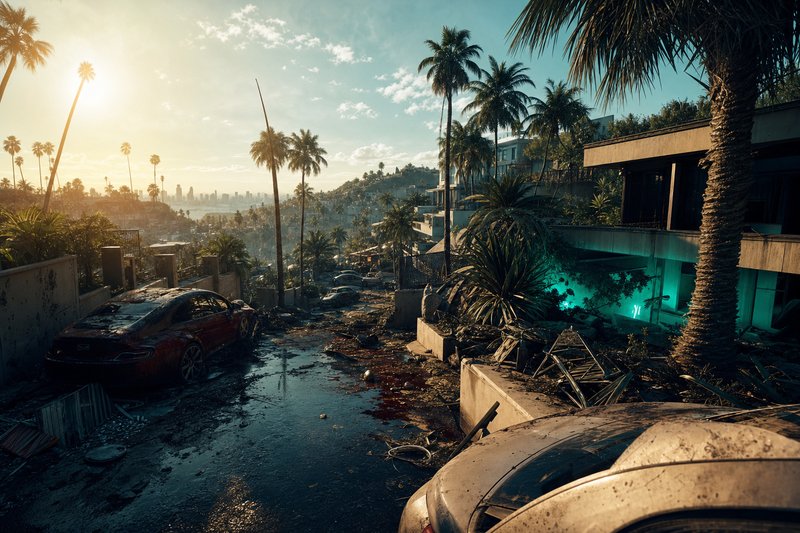
In December 2014, a modest web portal went live at di2beta.com. Players who had purchased Escape Dead Island — a spin-off no one particularly wanted — were directed there to redeem a code printed inside their game box. That code secured them a spot in the beta test for a sequel that, at the time, seemed like a sure thing: Dead Island 2, announced at E3 2014 to raucous applause and a memorable trailer set to Roy Orbison's "Oh, Pretty Woman."
What followed was one of gaming's most protracted development sagas: nine years, three development studios, a formal cancellation that never quite officially happened, and a final release in April 2023 that genuinely surprised critics with how good it was. The story of di2beta.com is, in miniature, the story of Dead Island 2 itself — a project that started with enormous promise, got lost for years, and eventually found its way back.
The 2014 Beta Program: What di2beta.com Actually Was
The beta portal at di2beta.com served two distinct purposes. First, it was a code validation platform: players who purchased Escape Dead Island found a printed redemption code inside the physical box. Entering that code on the portal registered them for beta access — it was Deep Silver and developer Yager Development's way of rewarding buyers of the spin-off while building a pre-launch community for the main game.
Second, the portal managed platform selection and PS4 exclusivity. The FAQ section of the site — a page that would later attract dozens of backlinks from major gaming publications — confirmed a detail that caused significant discussion at the time: PlayStation 4 players would receive beta access 30 days before Xbox One and PC users. This timed exclusivity deal, reportedly part of a broader arrangement between Deep Silver and Sony, became one of the most-covered gaming news stories of late 2014.
Publications ranging from IGN and Game Informer to smaller sites like Stevivor and PSX Extreme all linked directly to the FAQ page, documenting the exclusivity window and the code-redemption process. That flood of editorial coverage is why the domain still carries meaningful backlink equity today, despite the game being released nearly a decade later under entirely different circumstances.
The original di2beta.com portal is no longer operational. The beta codes it once validated were specific to a Yager Development build that was cancelled in July 2015 before any public test occurred.
Yager Development and the Cancelled Original (2013–2015)
The original Dead Island 2 was developed by Yager Development, a Berlin-based studio best known for Spec Ops: The Line. Deep Silver had acquired the franchise in 2011 and commissioned the sequel after the commercial success of the first Dead Island, developed by Techland.
Yager's vision for Dead Island 2 was ambitious. Early previews from E3 2014 and subsequent hands-on demos depicted a sun-drenched Los Angeles — dubbed "Hell-A" — as the setting, with up to four-player co-op, improved melee mechanics, and a focus on character class diversity. The game was projected for a 2015 release.
However, the relationship between Deep Silver and Yager broke down over creative and production disagreements. In July 2015, Deep Silver announced that Yager had been parted from the project. The studio later stated that the parting was "by mutual agreement," though the brevity of the statement suggested the split was not entirely harmonious. Those who had registered through the portal were left with codes to a beta that would never arrive.
Sumo Digital Takes Over (2015–2019)
Deep Silver quietly handed development to Sumo Digital, a UK-based studio with credits on LittleBigPlanet 3, Sonic & All-Stars Racing Transformed, and several other titles. Sumo started development largely from scratch, retaining the Hell-A setting and core zombie melee premise but rebuilding the game's systems.
During this period, Dead Island 2 effectively became a ghost. It remained on the release schedules of games journalists as a "when it happens" title, occasionally acknowledged by Deep Silver as still in development. In 2019, GamesBeat reported that Sumo Digital had also been removed from the project, though Deep Silver did not confirm the specifics publicly for some time.
The four-year Sumo development stint produced no public builds, no beta registrations, and no press coverage comparable to the 2014 wave. For fans who had followed the project since the 2014 announcement, the game had effectively vanished into a development black hole.
Dambuster Studios Rescues the Project (2019–2023)
Dambuster Studios — a Nottingham-based studio formed from the remnants of Crytek UK — took over development in 2019. Unlike Yager's more experimental design approach, Dambuster focused on execution: a tighter map, a deeper crafting and gore system, and a commitment to actually shipping the game.
The strategy worked. Dead Island 2 was officially revealed at The Game Awards 2022 with a new trailer, confirming a February 2023 release date (later shifted to April 21, 2023). The game launched as a timed exclusive on the Epic Games Store before arriving on Steam six months later.
Critically, the finished product impressed. Metacritic scores landed in the mid-70s to low-80s range across platforms, with many reviewers noting that Dambuster had delivered exactly what the original trailers had promised — a loud, gory, over-the-top melee zombie game set in a luridly detailed Los Angeles. It was not the prestige action-RPG that Yager had gestured toward in 2014, but it was genuinely fun.
Dead Island 2 development timeline: from Yager's 2013 commission to Dambuster's 2023 launch. Each studio started near-fresh after their predecessor's departure.
What Happened to the Dead Island 2 Beta Codes?
The short answer: they expired. The codes included in Escape Dead Island copies granted access to a beta built by Yager Development on systems that ceased to exist when Yager was removed from the project in 2015. Deep Silver never issued replacement codes for the Sumo or Dambuster builds, and no public beta took place ahead of the 2023 launch.
Those who registered through the 2014 beta portal received no beta access, no notifications, and no refund offer. The portal itself remained online in a dormant state for several years before eventually going dark.
This is a reasonably common outcome for cancelled beta programs. The infrastructure costs of maintaining a redemption portal are not justified if the associated product no longer exists in the form it was planned. For completionists and gaming historians, however, the di2beta.com portal represents a concrete artifact of one of gaming's most unusual development stories — a moment when the sequel to a successful zombie game briefly had an infrastructure, a community, a planned launch window, and then lost all three.
Escape Dead Island: The Forgotten Spin-Off
Any history of the di2beta.com portal has to acknowledge Escape Dead Island itself, which occupies a strange place in the franchise's history. Developed by Fatshark and published by Deep Silver in late 2014, it was a cel-shaded 2.5D stealth-action game that bore only loose resemblance to the mainline series.
Critical reception was mixed-to-negative. Most reviewers acknowledged the game as a curiosity rather than a worthy entry in the franchise, and commercial performance was modest at best. The primary reason anyone bought it was that bundled beta code — making Escape Dead Island less a game and more a beta key delivery mechanism.
In retrospect, the whole arrangement was an early example of the "buy a game, get beta access" model that would later become common in the industry. Whether it was good value for players who spent $20–30 on a mediocre spin-off only to find the beta it promised would never arrive is, at this point, largely a historical question.
Dead Island 2 in 2026: The Current State of the Franchise
As of 2026, Dead Island 2 remains the last mainline entry in the franchise. Dambuster Studios has released two significant DLC packs — Haus (September 2023) and SoLA (December 2023) — which expanded the game with new locations, quests, and weapons. The Steam version launched in October 2023, substantially widening the game's player base.
A third mainline game in the series has not been officially announced. Deep Silver parent company Plaion has undergone significant restructuring, and the fate of the franchise beyond its current installment remains genuinely uncertain. However, Dead Island 2's eventual commercial success — it sold over one million copies in its first three days — makes a sequel financially viable.
For fans curious about what a Dead Island 3 might look like, the search term "dead island 3 release date" currently generates around 600 monthly searches in the US, suggesting consistent audience interest even with no official product to discuss. That the franchise maintains that level of passive interest, years after the most recent entry, speaks to the zombie melee formula's enduring appeal.
Dead Island 2 is currently available on PS5, Xbox Series X/S, PS4, Xbox One, PC (Epic Games Store, Steam), and Xbox Game Pass. The Haus and SoLA DLC packs are available separately or as part of the Gold Edition.
Lessons from the Dead Island 2 Development Saga
The Dead Island 2 story offers several observations that apply broadly to how games are developed and marketed.
Beta programs carry implicit promises. When Deep Silver structured a beta registration around a paid product (Escape Dead Island), it created an expectation that the associated game would materialize in the form players had been shown. When that didn't happen, the portal became an abandoned digital artifact rather than a community touchstone.
Publisher-developer relationships shape outcomes more than development talent. Yager was a capable studio with genuine creative vision. Sumo Digital had shipped numerous successful titles. The problem was not competence but fit — the match between creative direction, publisher expectations, and production reality. Dambuster succeeded partly because the scope had been clarified and the expectations aligned.
Long development cycles can produce coherent games. Nine years of interrupted development did not produce an incoherent mess. The Hell-A setting, the melee combat focus, and even the basic tone of the game remained consistent from 2014 to 2023. What changed across studios was depth, polish, and production confidence — not the core idea.
For gaming historians, di2beta.com sits at an interesting intersection: a piece of promotional infrastructure for a product that got lost, and then found, and then turned out to be pretty good. The portal's legacy is not in the beta it promised — which never happened — but in the editorial record it generated, dozens of gaming publications capturing a moment of genuine excitement about a game that would eventually justify that excitement, just eight years later than planned.